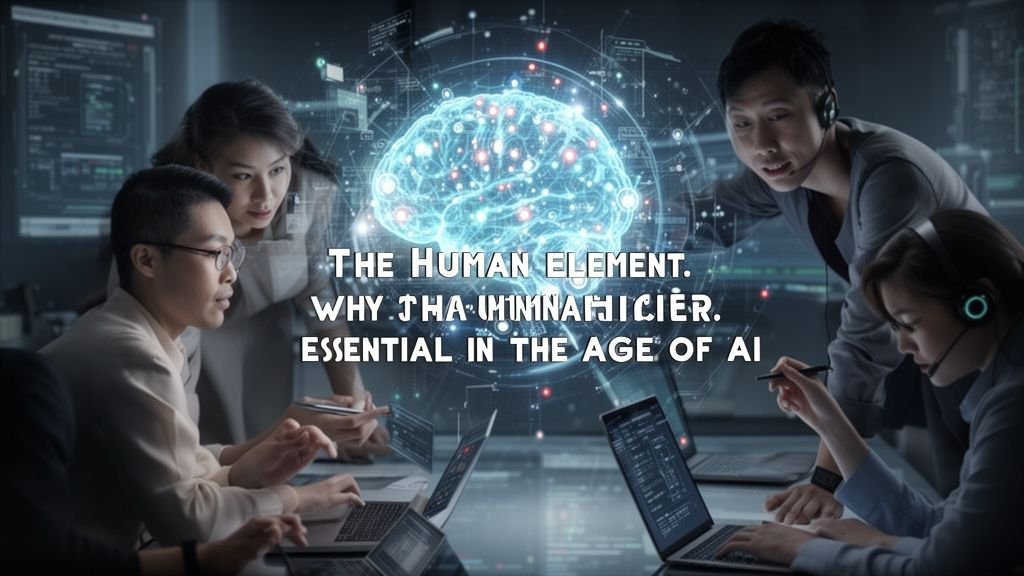
TL;DR: While artificial intelligence excels at instantly generating answers and organizing information, human judgment, critical thinking, and the ethical foundations of the humanities are more vital than ever to interpret and apply these outputs.
The Separation of Information Generation and Ethical Judgment
We live in an era characterized by an unprecedented abundance of information. Generative artificial intelligence systems can compose essays, analyze complex datasets, write functional code, and generate comprehensive answers to complex queries in a matter of seconds. These technological milestones have led some to question the long-term utility of human-centric disciplines, such as literature, history, philosophy, and the broader humanities.
However, this perspective overlooks a fundamental distinction in cognitive tasks: the difference between generating information and exercising judgment. AI tools excel at processing vast amounts of existing data and generating plausible-sounding answers based on statistical patterns. What they lack, by design, is the capacity for true contextual understanding, moral reasoning, and ethical evaluation. It is precisely because machines can generate answers so easily that the human capacity for critical judgment has become more important than ever.
Why Critical Analysis Outlasts Technical Automation
As technical skills like basic programming and rote analytical writing become increasingly subject to automation, the qualitative skills fostered by the study of the humanities are emerging as premium professional assets. These human-centric skills are highly resistant to technological displacement because they rely on nuanced emotional and cultural understanding:
- Contextual and Historical Evaluation: Understanding the historical and cultural context behind a dataset is crucial to identifying systemic bias or logical errors in automated outputs.
- Ethical and Moral Frameworks: Developing the philosophical grounding needed to assess whether an automated system's decision-making process is fair, just, and aligned with human values.
- Nuanced Communication: Translating complex technical outputs into meaningful, empathetic, and culturally resonant human narratives.
Without these critical human perspectives, the outputs generated by artificial intelligence risk being sterile, inaccurate, or ethically compromised. The humanities provide the essential framework required to challenge, audit, and guide automated systems.
Practical Frameworks for Integrating Human-Centered Systems
To build a future where technology enhances human potential rather than diminishing it, organizations must adopt human-in-the-loop and human-centered design frameworks. This means that AI should not be deployed as an autonomous decision-maker in highly sensitive areas like hiring, legal evaluation, or resource distribution. Instead, it must serve as an assistant, with human specialists exercising final oversight.
Educators and industry leaders must actively integrate humanities-based training into technical curricula. Software engineers, data scientists, and product managers must be trained in ethics, critical reading, and history. By cultivating a multidisciplinary approach that marries technical capability with humanistic inquiry, we can design systems that are not only technologically advanced but also ethically sound and socially beneficial.
Key Takeaways
- Value of Judgment: AI can rapidly generate answers, but human critical judgment is required to evaluate their accuracy, ethical implications, and real-world utility.
- Resilient Humanities Skills: Qualitative skills such as ethical reasoning, contextual analysis, and empathetic communication are highly resistant to automation.
- System Auditing: Applying historical and philosophical frameworks is essential to detecting bias and ensuring AI outputs are fair and balanced.
- Interdisciplinary Future: True innovation occurs when advanced technological capabilities are guided by the deep, human-centered values of the humanities.