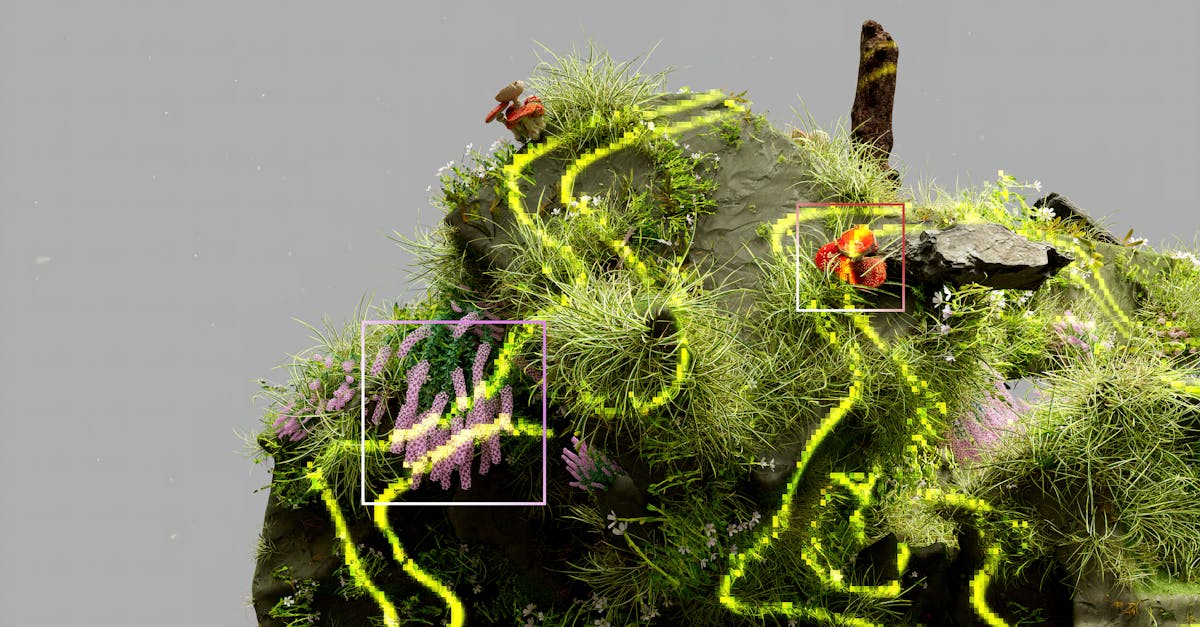
The agricultural landscape is undergoing a seismic shift, driven by the relentless march of Artificial Intelligence (AI). At the forefront of this revolution is AI-powered plant identification, a technology poised to redefine farming practices, optimize resource utilization, and enhance crop yields. See our Full Guide for deeper insights.
For decades, farmers have relied on manual labor and broad-spectrum herbicides to manage weeds, a costly and often environmentally damaging approach. AI-powered plant identification offers a precision alternative, targeting unwanted vegetation with unparalleled accuracy. This transformative capability promises to alleviate labor shortages, reduce herbicide usage, and ultimately, contribute to a more sustainable and profitable agricultural sector.
The Dawn of the Large Plant Model (LPM)
Carbon Robotics, a pioneering force in agricultural AI and robotics, has recently unveiled a groundbreaking innovation: the world's first Large Plant Model (LPM). This advanced AI model represents a significant leap forward in plant detection and identification, trained on an unprecedented dataset of 150 million labeled plants. This vast and diverse dataset, the largest of its kind in the agricultural sector, equips the LPM with the ability to recognize and differentiate between various plant species, growth stages, and environmental conditions with remarkable precision.
The implications of the LPM are far-reaching. Its ability to identify plants rapidly and accurately empowers farmers to implement targeted weeding strategies, minimizing the impact on beneficial crops and reducing the need for widespread herbicide application. This precision approach not only protects the environment but also optimizes resource allocation, ensuring that valuable nutrients and water are directed towards desired plants.
A Data Flywheel Effect: Continuous Learning and Improvement
The LPM's capabilities are further enhanced by a continuous learning process. As Carbon Robotics' LaserWeeder™ fleet operates in fields around the globe, the system continuously ingests real-world data, creating a "data flywheel effect." This constant influx of information strengthens the model exponentially, improving its performance and accuracy over time. This dynamic learning process ensures that the LPM remains at the cutting edge of plant identification technology, adapting to new challenges and optimizing performance in diverse agricultural environments.
Paul Mikesell, Founder and CEO of Carbon Robotics, emphasizes the immediate value farmers derive from this advanced AI technology: "When our robots can understand any plant in any field immediately and adapt behavior in real-time, farmers immediately get maximum value from the machines. The Large Plant Model provides farmers with the most advanced AI technology to maximize the weeding quality of LaserWeeder in their unique environments."
Carbon AI: The Brains Behind the Operation
The LPM serves as the foundation for Carbon AI, the intelligent decision-making engine that powers Carbon Robotics' entire product ecosystem. Carbon AI processes the vast amounts of plant and field data collected by the LPM to make real-time decisions, including identifying and eliminating unwanted plants, navigating challenging field conditions, and adapting to variations in crop growth.
Carbon AI currently drives the functionality of all LaserWeeders and the Carbon ATK (Autonomous Tractor Kit), enabling farmers to achieve smarter and more precise weed control, as well as dependable tractor autonomy. These AI-powered solutions are designed to streamline agricultural operations, reduce labor costs, and improve overall efficiency.
Plant Profiles: Tailoring AI to Specific Needs
Recognizing that every farm and every field is unique, Carbon Robotics has introduced Plant Profiles, a new feature designed to personalize the LPM to specific crop, weed, and field conditions. This user-friendly feature allows farmers to quickly and easily tailor the foundational LPM to their individual needs.
Farmers can add images of their specific crops and weeds to their Plant Profile, allowing the system to adapt its behavior in real-time. This rapid customization process, which takes only minutes, enables farmers to optimize the LaserWeeder's performance in their unique environments.
David Faircloth, Farm Manager at Bland Farms, highlights the transformative impact of Plant Profiles: "We use plant profiles in our Vidalia Onion seed beds, transplants, and direct seeded onions. This has been a game changer for us and the simple, user-friendly platform allows our operators to maximize LaserWeeder performance in real-time in the field."
Addressing the Challenges Facing Modern Agriculture
The advent of AI-powered plant identification comes at a critical juncture for the agricultural industry. Farmers are grappling with a confluence of challenges, including labor shortages, rising input costs, and increasing concerns about the environmental impact of herbicides.
Carbon Robotics' AI-powered solutions offer a compelling answer to these challenges. By reducing labor requirements, minimizing herbicide usage, and optimizing resource allocation, these technologies enable farmers to achieve greater efficiency, profitability, and sustainability.
The Future of Farming: Intelligent, Precise, and Sustainable
AI-powered plant identification is not merely a technological advancement; it represents a fundamental shift in the way we approach agriculture. By leveraging the power of AI, we can create farming systems that are more intelligent, precise, and sustainable.
The Large Plant Model and Carbon AI are paving the way for a future where:
- Weed control is targeted and efficient, minimizing the impact on beneficial crops and the environment.
- Labor costs are reduced through automation and optimized resource allocation.
- Crop yields are increased through precise plant identification and targeted interventions.
- Farming practices are more sustainable, reducing reliance on harmful chemicals and promoting soil health.
As AI technology continues to evolve, its impact on agriculture will only grow stronger. AI-powered plant identification is just the beginning of a new era of intelligent farming, one that promises to revolutionize the way we grow food and manage our land. The global business community should take note: the future of agriculture is inextricably linked to the advancement and adoption of AI-driven solutions. The benefits are clear: increased efficiency, reduced costs, and a more sustainable approach to feeding the world.