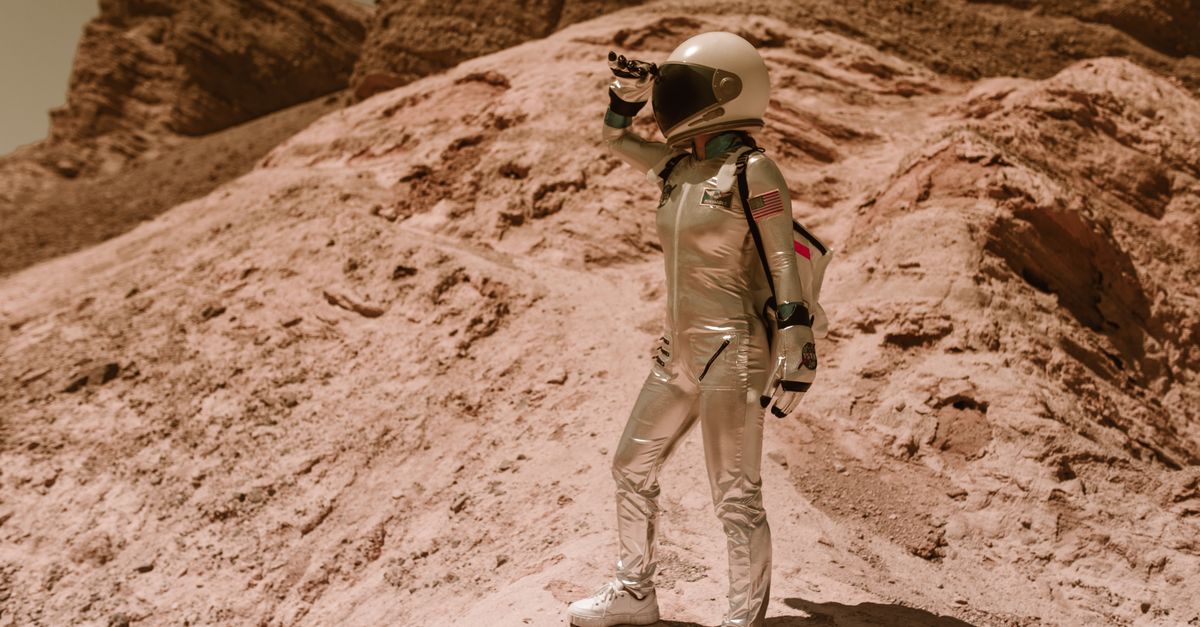
NASA's relentless pursuit of space exploration is not just about pushing the boundaries of human capability; it's also a masterclass in technological innovation. Among the most promising of these innovations are Artificial Intelligence (AI) and Augmented Reality (AR), which are rapidly evolving from experimental tools to indispensable digital co-pilots for astronauts, particularly during the high-stakes environment of spacewalks, also known as Extravehicular Activities (EVAs).
For global business leaders, the implications of NASA's advancements extend far beyond the cosmos. The technologies developed and refined for space are finding applications in various industries, offering opportunities for increased efficiency, enhanced safety, and groundbreaking solutions. This is particularly evident in the integration of AI and AR for mission-critical operations. See our Full Guide for more details.
Spacewalks are inherently complex and dangerous. Astronauts face a multitude of challenges, including equipment malfunctions, disorientation in zero gravity, and the constant threat of micrometeoroid impacts. Traditionally, astronauts have relied heavily on ground control for guidance, receiving detailed instructions and troubleshooting support through radio communication. However, communication delays, especially on missions to the Moon or Mars, can be significant, potentially jeopardizing the mission's success and the astronauts' safety.
This is where AI and AR come into play. NASA is developing and implementing AI-powered systems that can provide astronauts with real-time assistance, anticipate potential problems, and offer immediate solutions. AR overlays enhance the astronaut's field of vision, providing critical information directly onto their helmet visor. This includes schematics of equipment, step-by-step procedures, and even visual cues to help with orientation.
One key application of AI is in predictive maintenance. By analyzing data from sensors on spacesuits and equipment, AI algorithms can identify patterns that indicate potential failures. This allows astronauts to proactively address issues before they escalate into critical problems. Imagine an AI that detects a subtle increase in the temperature of a suit's cooling system, alerting the astronaut to a potential pump malfunction before it leads to overheating. This kind of proactive intervention can be life-saving.
Furthermore, AI can assist with complex troubleshooting tasks. When an unexpected issue arises during a spacewalk, astronauts can use voice commands to query the AI system for potential solutions. The AI can access a vast database of information, including equipment manuals, troubleshooting guides, and past mission logs, to provide the astronaut with targeted advice. AR can then overlay this information onto the astronaut's visor, guiding them through the repair process step-by-step. This drastically reduces the reliance on ground control, allowing astronauts to respond more quickly and effectively to emergencies.
The integration of AR further streamlines spacewalk operations. Astronauts can use AR to visualize the steps involved in a particular task, ensuring that they are following the correct procedures. AR can also provide real-time feedback, alerting astronauts to potential errors before they make them. This is particularly valuable when working with unfamiliar equipment or in complex environments.
Consider the scenario of repairing a damaged solar panel. Using AR, an astronaut can overlay a virtual blueprint of the solar panel onto the actual panel, highlighting the specific areas that need attention. The AR system can then guide the astronaut through the repair process, step-by-step, ensuring that each connection is made correctly and each fastener is tightened to the proper torque. This level of precision and guidance is invaluable in the challenging environment of space.
The benefits of AI and AR extend beyond immediate problem-solving. These technologies also enhance training and preparation for spacewalks. Astronauts can use virtual reality simulations, powered by AI, to practice complex tasks and procedures in a safe and controlled environment. These simulations can replicate the challenges of spacewalks, including disorientation, equipment malfunctions, and communication delays. This allows astronauts to develop the skills and confidence they need to perform effectively in real-world situations.
NASA's commitment to AI extends beyond spacewalks. The agency leverages AI for a wide range of applications, including analyzing vast amounts of data from satellites and telescopes, developing autonomous vehicles for planetary exploration (88% of driving done by the Perseverance rover has been autonomous), and streamlining air traffic control. As NASA continues to push the boundaries of space exploration, AI will undoubtedly play an increasingly important role in ensuring the safety and success of its missions.
The implications for global business leaders are clear. The AI and AR technologies developed by NASA are not just for space; they have the potential to revolutionize industries across the board. From manufacturing and healthcare to construction and energy, the ability to provide workers with real-time assistance, anticipate potential problems, and enhance training can lead to significant improvements in efficiency, safety, and productivity.
Imagine a construction worker using AR to visualize the placement of pipes and wires before installing them, or a surgeon using AI to guide them through a complex procedure. The possibilities are endless.
NASA's focus on collaboration with the private sector and the STEM community further accelerates the adoption of these technologies. By partnering with leading AI companies and research institutions, NASA is ensuring that its innovations are accessible to a wider audience. This collaborative approach fosters innovation and drives the development of new applications for AI and AR.
In conclusion, NASA's integration of AI and AR into spacewalk operations represents a significant leap forward in space exploration technology. These digital co-pilots are empowering astronauts to work more effectively, respond more quickly to emergencies, and push the boundaries of human capability. For global business leaders, NASA's advancements offer a glimpse into the future of work, where AI and AR are used to enhance human performance, improve safety, and drive innovation across a wide range of industries. The lessons learned from space are rapidly becoming valuable assets here on Earth, creating new opportunities for growth and progress.